Today, March 5, 2026, the large-scale armed conflict in the Middle East directly affected the sovereign territory of the Republic of Azerbaijan for the first time. According to local media and sources close to the government, an unmanned aerial vehicle (UAV) and missiles launched from the Islamic Republic of Iran crashed and exploded on the grounds of the Nakhchivan International Airport.
This incident underscores an unprecedented level of regional tension and demands the most level-headed and detailed analysis of the current situation.
According to initial reports from local news agencies and video footage rapidly spreading across social networks, the crash of the aircraft (presumably a Shahed-type kamikaze drone) was accompanied by a massive explosion and a subsequent fire on the airport's territory.
The Nakhchivan International Airport is a key transport and strategic hub for the exclave, located just 10–30 kilometers from the state border with Iran. At present, competent Azerbaijani authorities are assessing the damage caused to the infrastructure. No official information regarding potential casualties or injuries among the airport's civilian personnel or the local population has been released yet.
The drone crash in Nakhchivan cannot be viewed outside the context of the global Middle East crisis. The incident occurred on the sixth day of a massive air and naval operation conducted by the US and Israel against Iran's strategic infrastructure.
In response to the coalition's strikes, Tehran has deployed its missile and drone arsenal, which has already led to a chaotic expansion of the conflict's geography. Over the past few hours, reports have emerged regarding:
Interceptions of Iranian missiles and drone crashes in Saudi Arabia, Kuwait, and the UAE.
Incidents involving unidentified drones near a British airbase in Cyprus.
The complete blockade of shipping in the Strait of Hormuz by IRGC forces.
Amid overloaded navigation systems, the intense use of electronic warfare (EW) by all parties to the conflict, and attempts to strike the bases of opposition Kurdish groups, Iran's loss of control over its strike drones—and their subsequent incursion into neighboring states' airspace—has become a critical threat to the entire region.
In light of the sharp deterioration of the situation on its southern borders, Azerbaijan is taking comprehensive measures to protect its territorial integrity and civilian infrastructure. Several sources report the redeployment of additional Armed Forces units to the border with Iran and the placement of air defense systems on maximum combat alert.
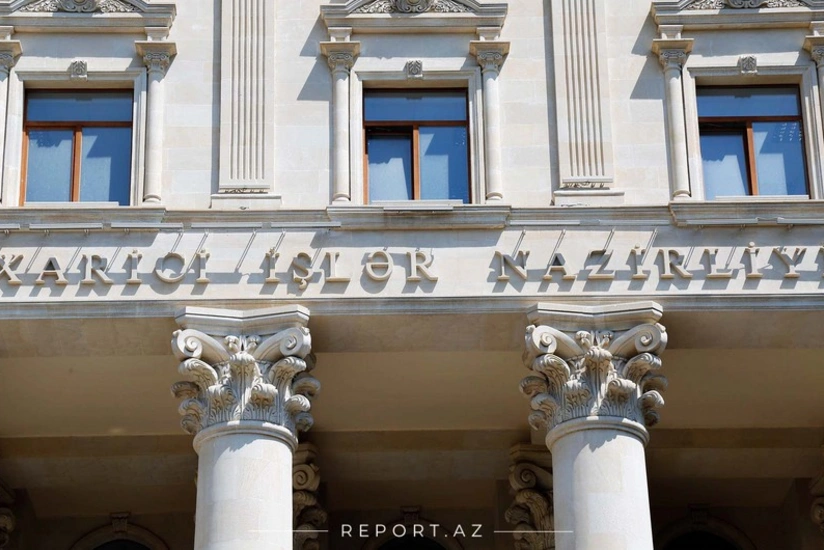
The public is awaiting an official statement from Azerbaijan's Ministry of Defense and Ministry of Foreign Affairs, which is expected to provide a stern legal and military-political assessment of the violation of the country's airspace.
Azerbaijan has consistently distanced itself from the unfolding US-Iran conflict, urging all parties to exercise restraint. However, today's strike on a strategic civilian facility presents Baku with an immediate priority: ensuring the absolute safety of its citizens and the inviolability of its borders amidst unpredictable regional turbulence.

 Baku 25° C