 Baku 29° C
Rich vs poor: EU countries debate new seven-year budget
- 26 May, 2026
- 18:45
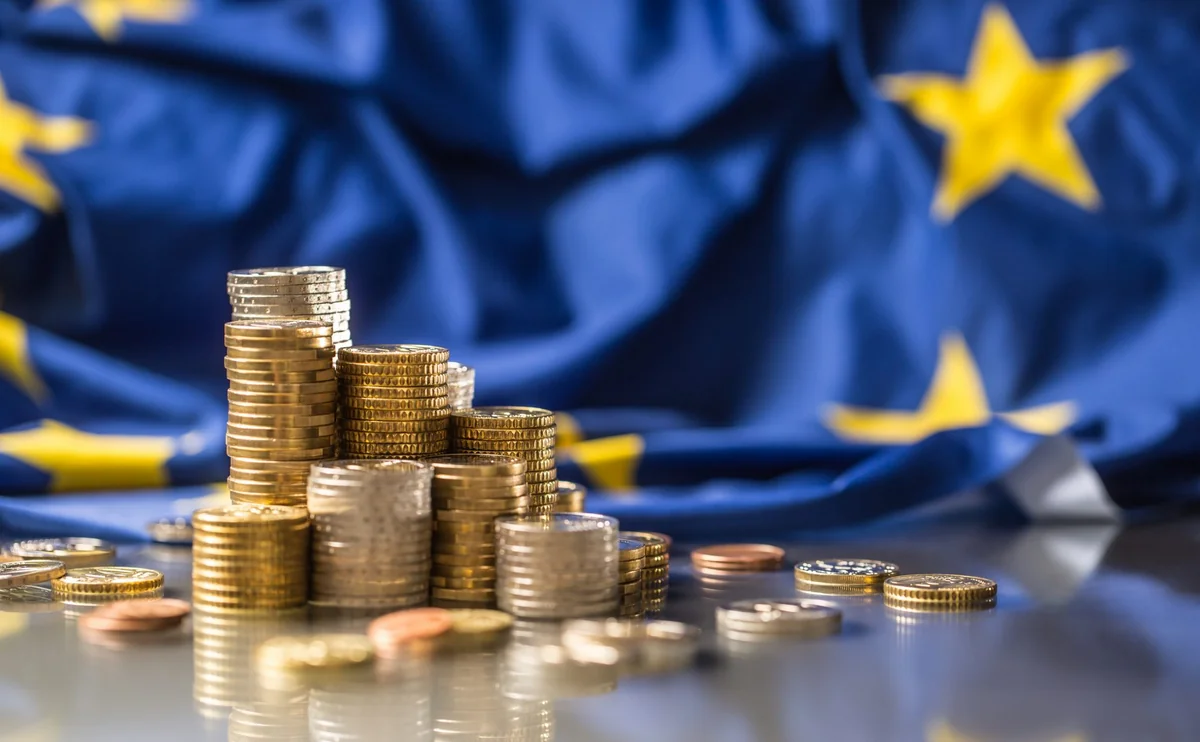
At the EU General Affairs Council meeting in Brussels, the main budgetary standoff has begun ahead of negotiations on the European Union's new seven-year financial plan.
As reported by the European bureau of Report, the camp of recipient countries is demanding the preservation of cohesion policy and the opening of new funding sources, while donor states are pushing for spending cuts.
"Friends of Cohesion" vs. EU donor countries
At the EU General Affairs Council meeting in Brussels, the focus of discussion is the future Multiannual Financial Framework (MFF) for the period after 2027, which is to determine the allocation of European Union funds through the middle of the next decade.
The dividing line runs between the "Friends of Cohesion" group, which unites more than a dozen and a half countries of Central, Eastern, and Southern Europe led by Romania, and the donor camp (so-called net contributors) - states that pay more into the EU budget than they receive back.
While the former demand expanded investments and are open to new pan-European financing mechanisms, the latter are talking not about redistribution but about cutting the budget itself.
Romania takes the dispute to the political level
Before the start of the session, Romania's Minister of Foreign Affairs Oana-Silvia Țoiu outlined Bucharest's position as one of the leaders of the coalition of EU recipient countries.
For Romania, the budget discussion goes far beyond technical parameters. Bucharest views cohesion policy as a tool for maintaining economic convergence within the union and warns that cutting these programs will deepen disparities between regions. Put simply, the gap between "old" and "new" Europe will start widening again.
According to EU diplomatic sources, the statement backed by the Friends of Cohesion group includes several fundamental demands at once. Among them are preserving cohesion policy as an independent and protected budget line, expanding investment in regions, discussing new EU "own resources," and the possibility of using joint borrowing to finance the union's new objectives.
The last point is particularly sensitive: in essence, it concerns a return to the logic used after the pandemic with the launch of the NextGenerationEU fund, when the European Union entered the debt market on a mass scale for the first time.
For the countries of Eastern and Southern Europe, this scheme becomes a way to avoid a direct conflict between traditional spending items and the EU's new priorities - defense, industrial policy, and technological modernization.
Their central argument: Europe must not finance new objectives at the expense of old regional programs.
Germany and the northern bloc demand cutting the "bill"
The Friends of Cohesion coalition's approach is meeting resistance from donor states.
A coordination meeting of countries that contribute more to the EU budget than they receive from it was held in parallel in Brussels. These are primarily Germany, the largest donor, as well as France, the Netherlands, Sweden, Austria, Denmark and others.
In Brussels, a coordination meeting of nine countries that contribute more to the EU budget than they receive from it is taking place in parallel. These are, first and foremost, Germany, the largest donor, as well as France, the Netherlands, Sweden, Austria, Denmark, and others.
Their position is based on a different calculus. After the pandemic, the energy crisis, rising defense spending, and economic slowdowns, the governments of these countries are facing domestic budgetary pressure and are not prepared to increase contributions to the common EU budget.
Sweden's Minister for EU Affairs Jessica Rosencrantz formulated this position in the toughest possible terms: "The budget must be significantly reduced. There is simply no room for increasing Sweden's contribution, nor that of other net donors."
The Netherlands, in turn, proposes redistributing funds in favor of areas that create "pan-European added value."
If we summarize the positions, the following conclusion can be drawn: fewer automatic transfers to regions and more spending on defense, border security, industrial competitiveness, technological independence, and EU strategic projects.
In effect, the donor camp is calling into question the historical architecture of the budget, where cohesion policy and agriculture have remained the largest line items for decades.
The dispute is not about figures, but about the model of Europe
Formally, the discussion concerns budget parameters of approximately €1.8 trillion. However, in Brussels it is increasingly acknowledged that the budget conflict extends far beyond accounting.
The Friends of Cohesion group proposes a model of Europe where the EU remains a mechanism for equalizing development across the entire space.
This concept envisions the continuation of major investments in infrastructure, transport, regional modernization, and reducing the economic gap between East and West.
The donor camp proposes a different architecture: the EU as a geopolitical player concentrating resources on defense, industrial policy, and global competition.
This is precisely why the question is no longer "how much to spend," but "what is Europe willing to keep spending on."
Thus, 16 EU countries want to preserve cohesion funds, increase investment in regions, consider new EU revenues, and resort to new joint borrowing. The donors, on the contrary, want to reduce the overall volume of the Multiannual Financial Framework (MFF), limit the growth of national contributions, redistribute funds in favor of pan-European projects, cut traditional spending items, and strengthen funding for security and competitiveness.
Author