
 Baku 28° C
OECD has developed a nature-oriented city conceptual framework
- 20 May, 2026
- 14:20
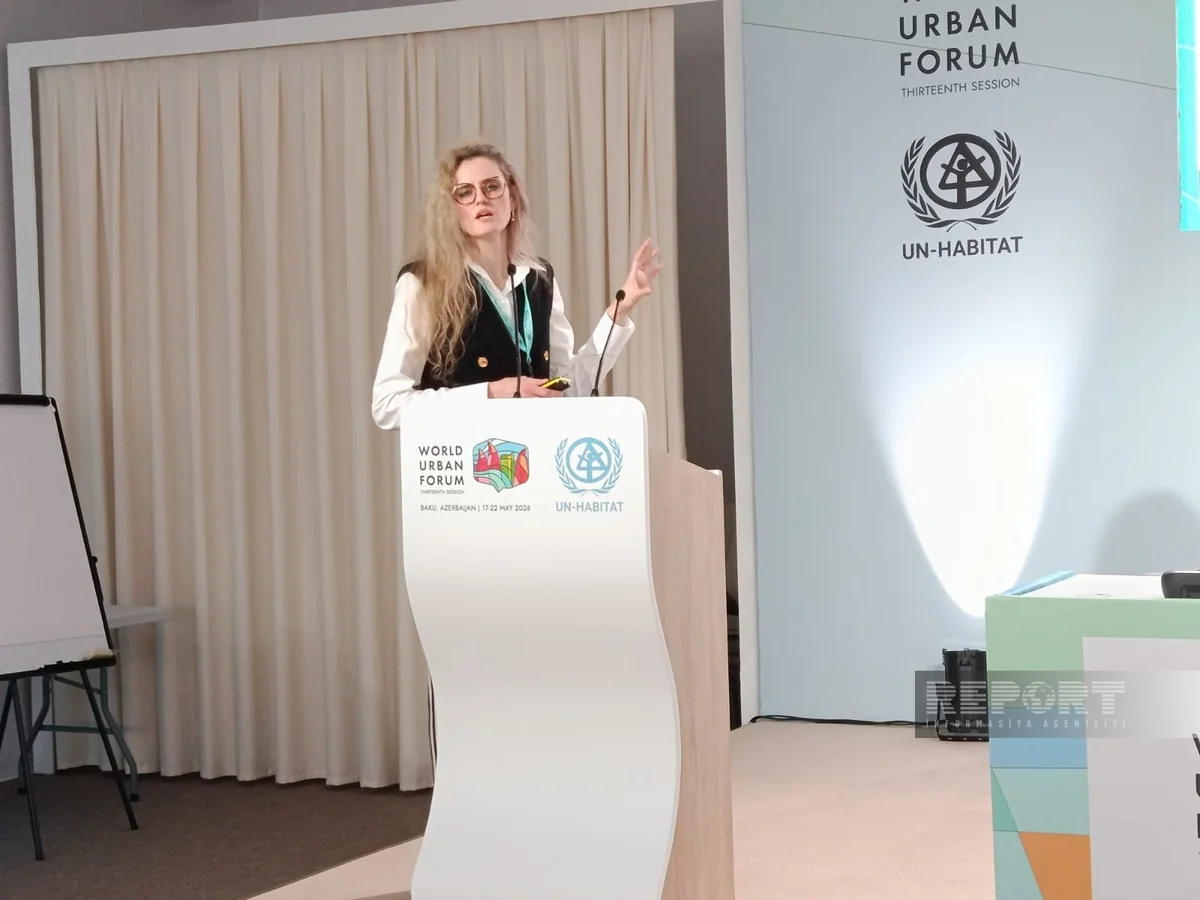
The Organisation for Economic Co-operation and Development (OECD) has developed a nature-positive city conceptual framework, Claudia Baranzelli, Coordinator of the Geospatial Analysis Laboratory at the OECD's Centre for Entrepreneurship, SMEs, Regions and Cities, Economics Analysis, Data and Statistics Department, said at the event titled "Transit-Oriented Development for Sustainable Urban Development" organized within the framework of the World Urban Forum (WUF13) held in Baku.
"We have developed a nature-positive city conceptual framework that seeks to combine biodiversity, climate, economy and well-being in a unique, integrated approach. This framework supports biodiversity as the real foundation of nature-positive cities. The OECD has conducted research on nature-positive cities. This research is about how cities can address the problem of biodiversity loss and at the same time benefit from the multiple advantages of nature. If we measure how much forest areas have decreased in OECD regions in recent decades, we can see this. It is also about the increasingly intensifying impacts of climate change; whether it is urban heat island effects, flood risk, or air and water pollution. And of course, all these factors affect people's well-being - manifesting in the form of deteriorating quality of life and increasing inequality, and ultimately, we can also put an economic price on all of this. Because disruptions in the economy, in the economic system, are also linked to the loss of nature," she noted.
Author