
 Baku 34° C
GCSP proposes more active role for EU in connectivity projects in South Caucasus
- 05 January, 2026
- 09:30
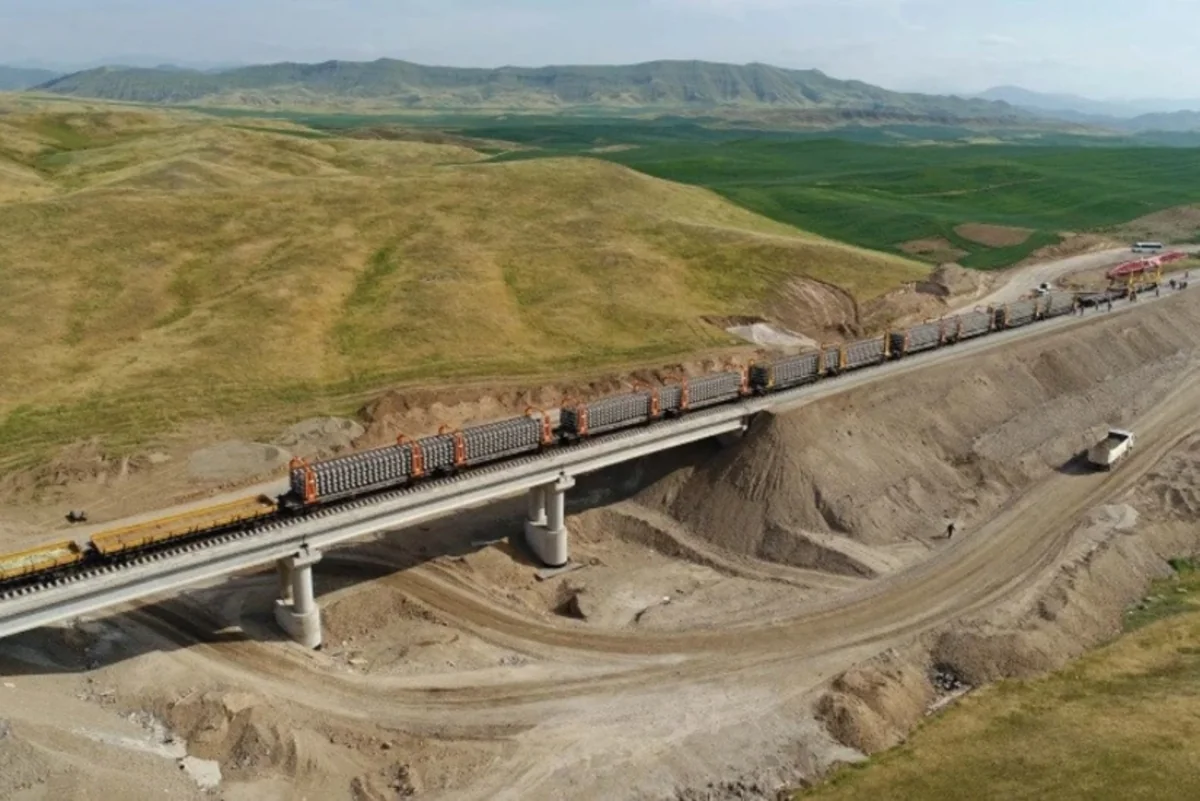
The EU can play a proactive yet complementary role alongside the US in advancing sustainable peace and connectivity in the South Caucasus, reads an article by the Geneva Center for Security Policy (GCSP), Report informs.
"While Brussels does not need to compete with Washington's leadership, it must also avoid stagnation. Given the US's tendency to prioritise short-term results and its uncertain long-term commitment to the region, the EU's comparative advantage lies in its patience, institutional continuity, and broad policy toolbox.
As Brussels seeks to define a clearer role alongside Washington, it is simultaneously exploring new diplomatic frameworks to anchor its engagement. In this context, EU Commissioner for Enlargement Marta Kos has proposed establishing a quadrilateral transport-connectivity format with Armenia, Azerbaijan, Türkiye, and the EU, emphasising that meaningful progress is possible only when peace is sustained.
"To that end, the EU can integrate the TRIPP into its wider connectivity and security agenda with coordinated political endorsement at the highest level. This may include appointing a high-level envoy or establishing a trilateral coordination mechanism with the US and regional partners to guarantee political continuity and strategic oversight. The EU's political engagement must remain balanced and impartial throughout this process, engaging genuinely with all parties to preserve credibility and avoid the missteps of previous one-sided initiatives.

The momentum generated by the Washington agreements has triggered concern among regional powers such as Russia and Iran, both of which are likely to seek ways to obstruct implementation and undermine progress on the TRIPP. In this environment, Armenia and Azerbaijan will need sustained political support from the EU and the US to resist external pressure and remain committed to the normalisation process. A credible and visible EU role – politically, diplomatically, and technically – is essential not only to safeguarding the gains achieved so far but also to ensuring that the region does not revert to instability under competing geopolitical agendas.
While some experts regard the signing of a peace agreement as an important step toward progress, the EU should avoid pushing the parties toward a purely symbolic deal. Instead, it should prioritise fostering a working peace through confidence-building measures, the gradual implementation of mutually agreed commitments, and the delivery of tangible peace dividends such as improved connectivity, trade opportunities, and local development benefits for both societies," reads the article.
Particular attention is paid to the possible technical role of the EU: "The EU can play a technical and enabling role by offering both sides targeted expertise in cartography and digital border mapping to support delimitation should such assistance be requested. The EU could provide the necessary tools and expertise if Armenia and Azerbaijan identify a need for neutral technical support.
More specifically, the EU can leverage its advanced cartographic and digitalisation capabilities – including the Copernicus Earth Observation Programme, the INSPIRE spatial data framework and GIS-based mapping technologies – to support transparent and data-driven border delimitation. These resources enable the creation of accurate digital maps, facilitate information sharing among technical experts, and provide neutral and verifiable data that reduces disputes and builds confidence between Armenia and Azerbaijan. Such tools should serve as technical enablers to ensure accuracy, transparency and mutual understanding of agreed border segments while fully respecting the sovereignty and decision-making authority of both sides."
"The EU can play an essential role in advancing the TRIPP by providing both research expertise and targeted investment under the Global Gateway initiative. Institutions such as the European Investment Bank and the European Bank for Reconstruction and Development enable the EU to support comprehensive feasibility studies, safety assessments and route-optimisation analyses across the Nakhchivan–Armenia–Azerbaijan corridor. It is important to note that the main Middle Corridor connection already runs through Azerbaijan and Georgia; the EU's approach should frame this new route as a complementary link that broadens and reinforces Trans-Caspian connectivity.
Restoring regional transport links and reopening borders have significant potential to enhance economic cooperation and trade across the South Caucasus. Improved infrastructure and access could substantially reduce the cost and duration of trade routes, offering mutual benefits for all parties involved – particularly for Armenia. Re-establishing overland transit would mark a decisive step toward ending Armenia's current state of regional isolation by reactivating direct trade connections to key partners such as Russia and Iran and facilitating broader access to Central Asian markets. While the Türkiye–Armenia border lies beyond the scope of the TRIPP, progress on Armenia-Azerbaijan normalisation could – over time and if Ankara and Yerevan see mutual benefit – help create a more favourable environment for discussing additional regional openings.
The TRIPP will strengthen Azerbaijan"s transit and strategic position within regional and Trans-Caspian transport networks, reinforcing its role as a key connectivity hub between Europe and Asia. The project offers Europe an opportunity to diversify transport routes and reduce reliance on corridors running through Russia. For the EU, restored regional connectivity would expand secure trade corridors to Central Asia, reduce transport costs and strengthen European supply chains by diversifying trade routes," reads the article. "Building on this technical foundation the EU can adopt a dual approach that strengthens both the hard infrastructure – railways, highways, ports and logistics hubs – and the soft infrastructure necessary for smooth and transparent crossborder cooperation. Investment in modern rail and road links would enhance mobility and trade efficiency in the region, while technical assistance in logistics management, transport safety and infrastructure maintenance would improve reliability and performance between Armenia and Azerbaijan."
Author