
 Baku 26° C
Priyantha Wijayatunga: ADB ready to support Azerbaijan in modernizing power grids - INTERVIEW
- 12 May, 2026
- 13:18
Azerbaijan is rapidly transforming its status from a hydrocarbon exporter into a key green energy hub linking the Caspian region with Europe. Projects like the Black Sea Submarine Cable require unprecedented investments in grid resilience and digital connectivity-objectives that underpin the Asian Development Bank's (ADB) new strategy.
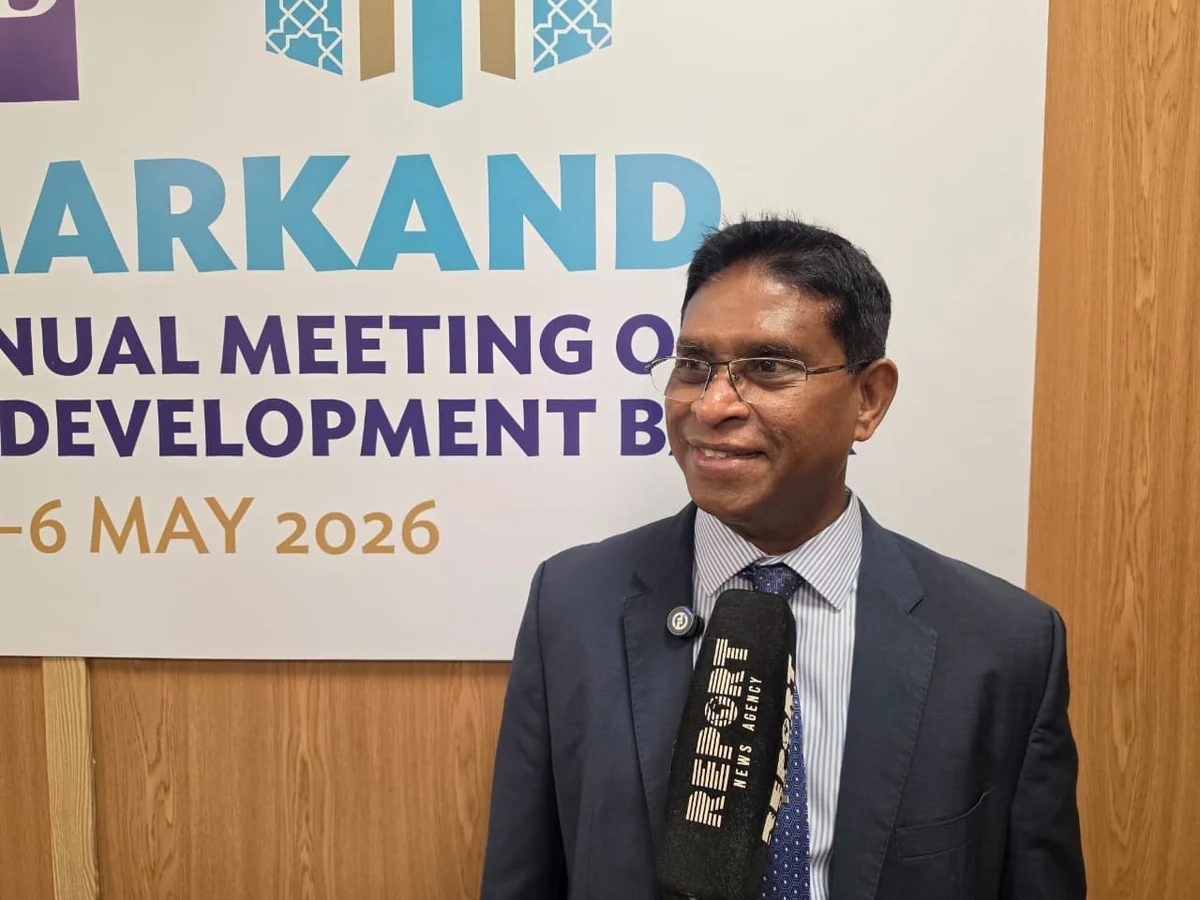
How much of ADB's $70 billion support package can be allocated to modernizing Azerbaijan's power grids, and why is the bank considering energy and IT as a single whole? Priyantha Wijayatunga, Senior Director for ADB's Energy Sector Office, answered these and other questions in an exclusive interview with Report.
Report presents the interview:
- The $70 billion initiative covers both the energy sector and digital connectivity. How does ADB intend to integrate these two areas in the South Caucasus and Central Asia, including Azerbaijan?
- First, it's important to clarify: although both areas are combined for a total of $70 billion, the target for the Pan-Asia Power Grid (PAGI) is set at $50 billion. Accordingly, $50 billion is allocated to the energy component, and $20 billion to the Asia-Pacific Digital Highway.
There is a close connection between these areas: fiber optic cable is typically laid along power transmission lines (PTLs), which is where the two sectors intersect. However, $50 billion is earmarked specifically for the development of the energy sector and ensuring electricity transmission.
It should be emphasized that these amounts apply to the Asia-Pacific region as a whole. Specific allocations to individual subregions or countries have not yet been made; this is the overall target the bank is aiming to achieve.

- What share of the announced $70 billion commitment will be mobilized through partnerships with the private sector, and what through direct government lending?
- According to our forecasts, by 2035, of the $50 billion allocated to the energy sector, approximately half will be provided through the bank's own resources – country and regional quotas. The remainder is expected to be raised from the private sector and other international financial institutions, including the World Bank and others.
- Regarding the new initiative, has a preliminary assessment or tentative resource allocation been conducted for the energy transition and modernization of Azerbaijan's power grid?
- Currently, no preliminary allocation of funds has been made to individual countries or subregions. The Bank operates both individual country programs and subregional initiatives, such as CAREC, SASEC, GMS, APG, and others.
Technical assistance projects are currently being implemented to lay the necessary foundation for the full launch of the PAGI.
- Azerbaijan is actively working on the Black Sea Submarine Cable project and developing routes for transporting green energy from the Caspian Basin to European markets. How does this ADB initiative contribute to strengthening Azerbaijan's position as a regional hub for green energy?
- The key objective of PAGI is to ensure energy connectivity within the Asia-Pacific region. However, our ambitions extend beyond this: we would welcome the possibility of integrating this system with European networks if it proves technically feasible.
As you rightly noted, work in this direction is already underway. We are open to providing comprehensive support to both Azerbaijan and the entire region.
- To successfully integrate large-scale solar and wind generation projects, particularly the Garadagh and Absheron projects, Azerbaijan requires significant investments in smart grid development. Is ADB exploring the prospects of providing targeted technical or financial support to state-owned grid operators (AzerEnerji and Azerishig) in the context of this new program?
- Of course, and not only as part of this program, but also through traditional country strategies. Strengthening domestic transmission networks is key to realizing the vision of a unified pan-Asian energy system.
We express our readiness to assist Azerbaijan, as well as any other country in the region, in updating and improving their electricity transmission systems. The form of ownership-whether state-owned or private-is irrelevant in this case. Should a country request it, we are ready to provide the necessary assistance.
Author